
Pharaoh Ants: Why They’re So Hard to Eliminate (and What Actually Works)
Pharaoh ants are tiny, persistent, and one of the hardest household ants to eliminate.
If you’ve seen small yellow-to-light-brown ants in your kitchen or bathroom that seem to multiply after you treat them, there’s a good chance you’re dealing with pharaoh ants.
For homeowners in Shreveport, Bossier City, and throughout Northwest Louisiana, the biggest risk isn’t the ants themselves — it’s wasting time and money on treatments that temporarily reduce activity but don’t solve the problem.
If you’re frustrated and ready for a real solution, the key is proper identification and a treatment plan tailored to pharaoh ants.
If you’d rather skip the trial-and-error approach, Anti-Pest’s experienced team can identify the species and eliminate the infestation the right way.
Not sure which species you’re seeing? We’ll identify it for you — schedule your inspection today!
What Are Pharaoh Ants?
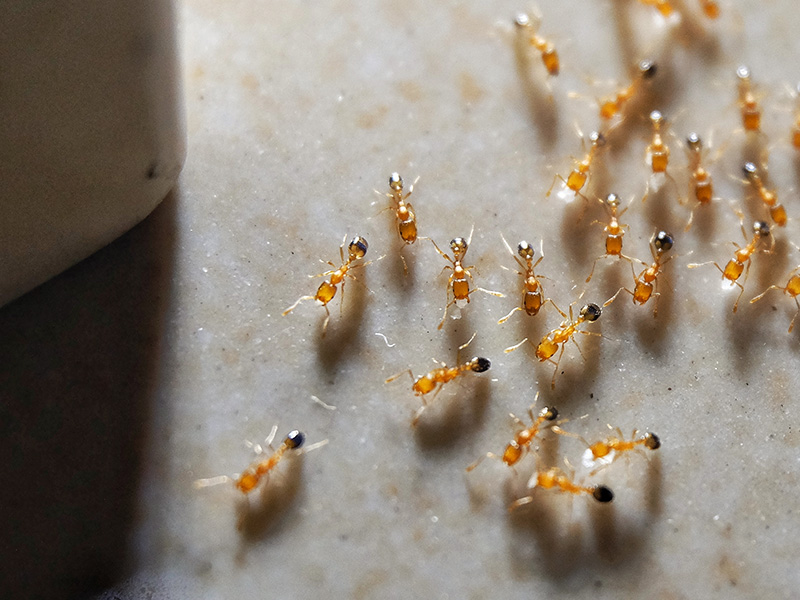
Pharaoh ants (Monomorium pharaonis) are tiny indoor ants that thrive in warm, protected areas of homes and buildings. They’re especially common in kitchens, bathrooms, and areas with plumbing or appliances that generate heat.
What makes them unique and challenging is how they organize their colonies. Instead of relying on a single central nest, pharaoh ants can create multiple interconnected nesting sites throughout a structure. That’s why activity may seem scattered or appear in several rooms at once.
For a more detailed look at identification, check out our local Pharaoh ant identification and control guide.
Why Pharaoh Ants Are So Hard to Eliminate
Pharaoh ants are difficult for three main reasons: they spread easily, they hide extremely well, and common “ant-killing” methods can actually make the situation worse.
1. They Spread by “Budding”
Unlike many ant species that rely heavily on a single nest, pharaoh ants can split their colony when disturbed, a process called budding.
When this happens, part of the colony moves to a new location and establishes another nest. This is why some homeowners notice more ant trails after trying to eliminate them.
2. They Nest in Hidden Indoor Spaces
Pharaoh ants don’t need much room. They can establish colonies inside:
- Wall voids
- Behind baseboards
- Around plumbing penetrations
- Near water heaters or appliances
- Inside cabinets or under the flooring
In apartments or multi-family housing, they can even move between units.
Because their nests are hidden, simply treating only the visible ants doesn’t address the real source.
3. Quick “Kill” Treatments Can Backfire
Fast-acting products may reduce what you see temporarily, but they often don’t reach the colony.
With pharaoh ants, incomplete or improperly applied treatments can trigger budding and cause the infestation to spread deeper into the structure. That’s when a manageable issue becomes much larger.
Signs You May Have Pharaoh Ants (Not Just “Small Ants”)
Pharaoh ants are often mistaken for other small ant species. A few clues that point specifically toward pharaoh ants include:
- Tinyants (about 1/16 inch)
- Light yellow to light brown coloration
- Activity in kitchens and bathrooms
- Trails that appear and disappear quickly
- Infestations that seem to spread over time
If you’re comparing species, our broader resource on Ant Control in Northwest Louisiana can help.
Are Pharaoh Ants Harmful?
Pharaoh ants don’t typically bite or sting like fire ants. The concern is indirect; they can contaminate food and surfaces as they forage.
In homes with infants, elderly family members, or immune-compromised individuals, it’s essential to resolve infestations promptly and professionally.
What Actually Works for Pharaoh Ant Control
A lasting solution requires a strategy specifically designed for pharaoh ants. In general, effective control comes down to three key components:
1. Correct Identification
The first and most crucial step is confirming the species. Different ants require different treatment strategies — and treating the wrong species the wrong way can make pharaoh ants worse.
Anti-Pest provides professional identification and inspection throughout Shreveport and Bossier City, so you know exactly what you’re dealing with.
2. Colony-Focused Treatment (Not Spot Treatments)
Pharaoh ants require a colony-focused approach that reaches back to the nest sites — not just the ants you see on the counter.
Just as importantly, treatment must be applied in a way that avoids triggering budding or spreading.
This is where professional experience matters. An incorrect approach can prolong the problem. A targeted one can eliminate it.
Start your pest control plan today!
3. Ongoing Service to Prevent New Infestations
Professional service ensures activity is fully resolved, not just reduced for a few days.
In Northwest Louisiana’s year-round warm climate, pest pressure doesn’t disappear for long. That’s why many homeowners choose ongoing home pest control to prevent pharaoh ants and other household pests from taking over.
Prevention: Reducing Outdoor Conditions That Invite Ants Inside
Since most ant problems originate outdoors, what’s happening around your home matters just as much as what’s happening inside.
Reducing exterior pressure makes it less likely that ants, including pharaoh ants and other common species in Northwest Louisiana, will move indoors in search of food, water, or shelter.
Here are practical prevention steps homeowners can take:
- Trim shrubs and tree branches away from the structure
- Avoid piling mulch or pine straw directly against the foundation
- Correct drainage issues and eliminate standing water near the home
- Seal visible cracks and gaps around doors, windows, and utility lines
- Keep outdoor trash containers tightly sealed and clean
These steps help reduce the chances of ants gaining access in the first place.
However, if pharaoh ants are already established inside walls or structural voids, exterior prevention alone won’t eliminate them. That’s when targeted professional treatment and ongoing home pest control provide lasting protection.
Don’t Wait for Your Pharaoh Ant Issue to Spread
With pharaoh ants, early action matters.
If you see small ants inside your home, especially in kitchens or bathrooms, it’s best to have them identified right away. The longer pharaoh ants remain undisturbed, the more opportunity they have to expand into additional nesting sites.
If you’re in Shreveport, Bossier City, or surrounding Northwest Louisiana communities, Anti-Pest can:
- Identify the species correctly
- Develop a treatment plan specific to pharaoh ants
- Monitor and ensure complete elimination
- Provide ongoing home pest control to prevent future infestations
Many homeowners choose year-round pest control service not just to control pharaoh ants, but also to prevent recurring issues with other ant species and other common indoor pests, including roaches, spiders, and rodents.
If you’re seeing ants inside, or you’d prefer to prevent the problem entirely, contact Anti-Pest today to schedule your inspection or enroll in ongoing home pest control.
FAQs About Pharaoh Ants in Louisiana
Why do pharaoh ants show up in bathrooms?
Pharaoh ants love moisture. Bathrooms give them steady access to water from sinks, tubs, toilets, and plumbing lines — plus plenty of small, hidden spaces to nest.
Where do pharaoh ants nest in a house?
They commonly nest in wall voids, behind baseboards, near plumbing, around appliances, and other warm, hidden areas.
Are pharaoh ants the same as fire ants?
No. Fire ants are outdoor, mound-building ants with painful stings. Pharaoh ants are tiny indoor ants that spread easily and require a specialized approach to eliminate.
If you’re dealing with stinging ants in your yard, see our fire ant identification guide.

Testimonials


Our Services



News, Blogs, & Articles
Anti-Pest Blog