
Pharaoh Ants vs. Argentine Ants: How to Tell Which You Have
If you’re seeing tiny ants in your kitchen, bathroom, or around pet bowls, it’s easy to assume “ants are ants.” In Northwest Louisiana, two common culprits are pharaoh ants and Argentine ants—and the most effective solution depends on which one you actually have.
As we say goodbye to February and head into March, homeowners in Shreveport, Bossier City, and across Northwest Louisiana often see ant activity ramp up. It’s also common to notice ants moving indoors in search of warmth, moisture, and reliable food—especially during temperature swings and rainy periods.
What Is the Difference Between Pharaoh Ants and Argentine Ants?
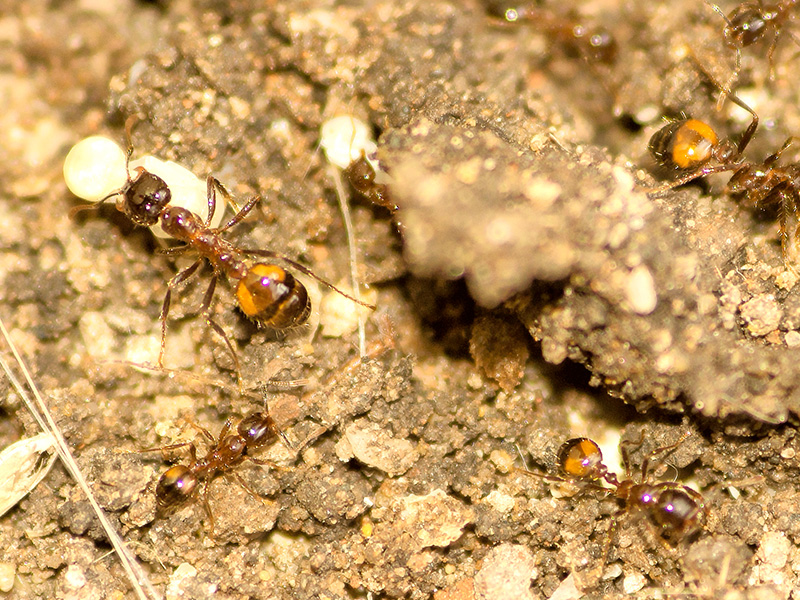
Pharaoh ants are typically indoor-nesting ants that form multiple small colonies inside walls and cabinets. Argentine ants usually nest outdoors and enter homes in visible trails, especially after rain. Because they behave differently, treatment strategies vary significantly.
How to Tell Pharaoh Ants From Argentine Ants
Size
- Pharaoh ants: Very small. Many homeowners describe them as “specks” at a quick glance.
- Argentine ants: Small, but usually easier to see individually.
Color
- Pharaoh ants: Yellow to light brown.
- Argentine ants: Brown to light brown.
Where You Typically See Them Indoors
- Pharaoh ants: Kitchens and bathrooms, inside cabinets, near sinks, and near warm appliances. They may seem to appear from multiple places at once.
- Argentine ants: Along baseboards, window sills, exterior walls, door thresholds, and around plumbing penetrations.
Trails and Movement Patterns
- Pharaoh ants: Trails can be subtle and scattered. You may see ants in more than one area of the house.
- Argentine ants: Often form very obvious, steady “highway” trails.
Nesting Behavior (Why Treatment Differs)
- Pharaoh ants: Can create multiple nests and may “split” when disturbed, which is one reason certain approaches can make the problem harder.
- Argentine ants: Can build large colonies with many queens and multiple nesting sites. Long-term resolution typically requires a consistent, property-wide strategy.
Step 1: Look at Where the Ants Are Coming From
Signs It’s More Likely Pharaoh Ants
Pharaoh ants are known for nesting inside structures. In late winter, homeowners often notice them:
- In kitchens and bathrooms (especially near moisture)
- Around sinks, dishwashers, and inside cabinets
- Seemingly appearing from more than one spot
If this sounds familiar, read our deeper breakdown: Pharaoh Ants: Why They’re So Hard to Eliminate (and What Actually Works).
Signs It’s More Likely Argentine Ants
Argentine ants often have a stronger connection to exterior activity. In late winter and early spring, you may notice:
- Trails entering from around windows and doors
- Activity spikes after rainy weather
- Ants moving along exterior walls and then into kitchens
A practical clue is whether you can follow a trail from an indoor baseboard to an exterior entry point.
Step 2: Use Behavior Clues Homeowners Notice
Clue A: Did the Problem Spread After a Treatment Attempt?
If ants appeared in new places after you tried to treat them, it can be a sign that the colony was disturbed, and the problem may now be harder to pinpoint.
Clue B: Is There One Main Trail or Several Scattered Areas?
- One strong, consistent trail can suggest an outdoor-to-indoor invader pattern (more consistent with Argentine ants).
- Multiple indoor areas at once can point to an indoor nesting issue (more consistent with pharaoh ants).
Step 3: Keep Seasonality in Mind (Why You’re Seeing Them Now)
Timing matters more than most homeowners realize.
Late Winter (February):
Ants move indoors in search of stable temperatures and dependable food sources. Even ants that usually live outside may push into kitchens and bathrooms during cold snaps.
Early Spring (March–April):
Outdoor colonies expand quickly. Heavy rains can flood nests and force ants to relocate—sometimes into wall voids, under slabs, or through small foundation gaps.
In Northwest Louisiana, it’s common for homeowners in Shreveport and Bossier City to see activity spike this time of year due to temperature swings and rainfall patterns.
If you’re also seeing other seasonal pest activity, reducing indoor attractants can help limit pressure. Check out our article, 7 Things in Your Home Attracting Pests Right Now (and How to Stop Them), for practical tips. Just keep in mind: cleaning and repairs won’t eliminate an established colony.
Why Correct Ant Identification Actually Matters
Correct identification matters because different ant species respond to different treatment strategies. What works for one type of ant can be ineffective — or even make the problem worse — for another.
Because pharaoh ants and Argentine ants behave so differently, the next step after identification is choosing the right approach.
For example:
- Pharaoh ants can split into multiple colonies when disturbed.
- Argentine ants often require broader exterior management to address multiple nesting sites.
That’s why effective ant control isn’t about “just spraying.” It’s about:
- Determining nesting patterns
- Mapping entry points
- Addressing moisture conditions
- Applying targeted control based on species behavior
That’s the difference between temporary relief and long-term resolution.
Treatment success depends on matching the strategy to the species and structure.
This article focuses specifically on pharaoh ants and Argentine ants. For a broader look at other common ant species in our area — and how professional treatment is tailored to each — visit: Ant Control in Northwest Louisiana
What Anti-Pest Does Differently in Shreveport–Bossier
At Anti-Pest, pest control isn’t a one-size-fits-all treatment.
When we evaluate a home for pest activity, we look at:
- Where activity is strongest (moisture zones vs. exterior trails)
- Structural access points
- Seasonal pressures
- Whether colonies appear fragmented or centralized
- Environmental conditions around the foundation
From there, we build a treatment strategy specific to your property—not just the species.
Our ongoing home pest control services are designed to manage ants and other common household pests year-round, helping prevent issues before they develop.
Because in Northwest Louisiana, long-term control means addressing both:
- What’s happening inside
- What’s happening around your home
That dual focus is what stops ants (and other pests) from coming back month after month.
How to Get Rid of Tiny Ants the Right Way in Northwest Louisiana
Pharaoh ants and Argentine ants are common in Shreveport and Bossier homes — but several small ant species can look similar at a glance.
The key isn’t guessing. It’s identifying the species correctly and using a treatment strategy that matches how that colony behaves.
You don’t need to panic over a few ants. But it’s time to consider professional help if:
- You’re seeing ants in multiple rooms
- You notice steady trails daily for more than a week
- The problem spreads after DIY treatment
- Ants keep returning despite cleaning efforts
Early intervention is almost always simpler (and less disruptive) than waiting.
If you’d like help identifying what you’re dealing with, Anti-Pest can evaluate the activity and recommend a targeted solution built for long-term control.

Testimonials


Our Services



News, Blogs, & Articles
Anti-Pest Blog