

American House Spider Identification: What Louisiana Homeowners Should Know
If you’re seeing messy cobwebs in the corners of your home and a small brown spider nearby, you’re likely looking at the American house spider (Parasteatoda tepidariorum), one of the most common indoor spiders in Northwest Louisiana.
This guide is for homeowners in the Shreveport–Bossier area who want quick, practical answers:
- What am I looking at?
- Is it dangerous?
- How is it different from other house spiders?
- How do I keep them from coming back?
If you’re unsure what spider you’re seeing, start with our overview of common house spiders in Louisiana. Or, have an Anti-Pest professional inspect and identify the problem quickly and accurately; keeping your home pest-free is easier than you think.
When Are American House Spiders Most Active?
American house spiders can remain active year-round indoors, with activity typically increasing during the warmer months. They are most active from spring through fall.
Quick Identification Summary
You’re probably seeing an American house spider if you notice:
- Loose, tangled cobweb-style webs
- Webs in corners, closets, garages, and storage areas
- A spider that usually stays near its web
- Small-to-medium body size
- Tan, brown, or gray coloring
- A rounded, somewhat bulbous abdomen
- Legs that look proportional — not excessively long or spindly
These spiders are web-builders; they don’t usually roam across floors like hunting spiders do.
What the “American House Spider” Usually Means
Homeowners use the name “American house spider” to describe a common cobweb-building spider found in and around houses.
You may see a scientific name online (often Parasteatoda tepidariorum), but you don’t need scientific details to deal with the situation. The most useful clues for homeowners are:
- The kind of web it builds
- The places it tends to hide
- Whether you’re seeing one spider or ongoing activity
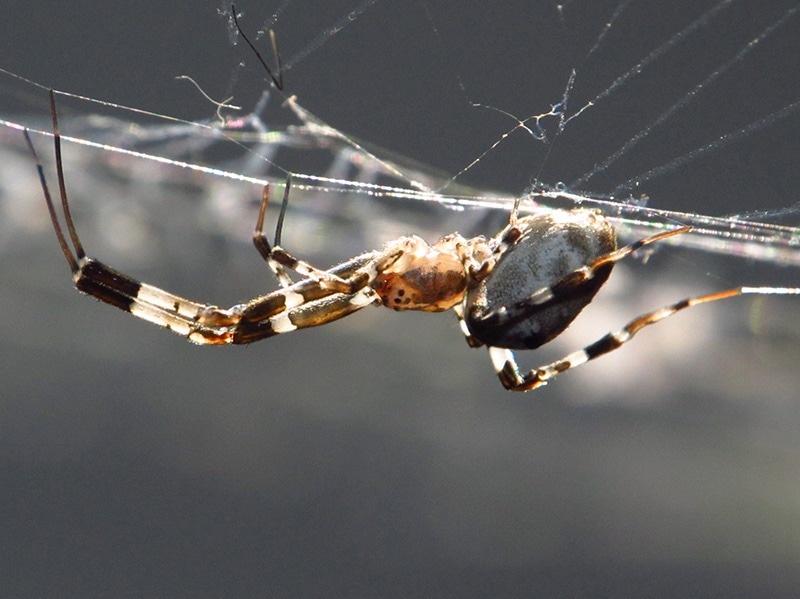
What American House Spiders Look Like
American house spiders can vary in shade and pattern, which is why photos online don’t always match exactly.
Typical features include:
- Small-to-medium size
- Tan to brown coloring
- Sometimes, there is faint striping or mottling on the abdomen
- A rounded back end
- Normal-looking legs (not oversized or ultra-thin)
Females are usually larger than males and more often seen sitting in webs.
Spider Webs: the Biggest Clue in Most Homes
The web is usually the easiest way to identify this spider.
American house spiders build irregular, tangled cobwebs, not neat circles. You’ll often find them:
- Where walls meet ceilings
- In closet corners
- Behind furniture
- In garages and sheds
- Around window frames
- Near porch-light windows where insects gather
If webs keep reappearing, it’s worth reading our local guide to what’s attracting all these spiders to my home right now.
Where They Hide in Louisiana Homes
In Shreveport, Bossier City, and Northwest Louisiana homes, American house spiders prefer areas that are:
- Quiet
- Undisturbed
- Good for anchoring webs
- Close to insect activity
Common locations include:
- Garage corners and framing
- Closets and storage rooms
- Laundry rooms
- Utility spaces
- Behind stored items
- Window and door corners
Are American House Spiders Dangerous?
For most households, the answer is no; American house spiders are not considered dangerous.
- Bites are rare
- They prefer to stay in their webs
- They avoid contact with people
Like any spider, they can bite if pressed against the skin, but their venom is typically not medically significant.
If any bite symptoms worsen or concern you, contact a medical professional.
How to Prevent American House Spider Infestations
To keep American house spiders out of your home, focus on prevention and reducing food sources.
- Knock webs down regularly
- Declutter storage areas
- Move boxes off the floors and away from the walls
- Seal entry points
- Replace worn door sweeps
- Repair or replace screens
- Adjust exterior lighting if it attracts insects
- Address other pest issues first (spiders follow prey)
When to Call Anti-Pest for American House Spider Problems
Occasional cobwebs are normal. Ongoing spider activity is not something you have to live with.
Consider scheduling signing up for Anti-Pest’s home pest control plan if:
- Webbing returns quickly after removal
- You’re seeing spiders weekly or daily indoors
- Activity is concentrated around doors, windows, or garages
- You’re also seeing insects such as roaches, ants, and earwigs
- You want the problem addressed at the source
Our trusted professionals can identify the spider, inspect for contributing pest issues, and treat your home, eliminating the current issues and returning every quarter to prevent new ones from developing.
American House Spider FAQs
Why do I have cobwebs in the corners of my house?
Spiders like quiet corners where they can catch insects. Those messy webs are just their little hunting spots. The spiders aren’t there all the time, but the webs stick around.
Does seeing house spiders mean my home is dirty?
Not at all. Spiders aren’t picky about cleanliness — they’re just following food. If you have insects around or quiet corners they can hang out in, spiders will show up, no matter how tidy your home is.
What should I do if I keep seeing spiders in my bedroom?
Start by knocking down webs and tidying up clutter. Check window and door seals, and keep an eye out for insects that might be attracting them. If spiders keep showing up, a quick inspection can help figure out how they’re getting in.
What do American house spider eggs look like?
American house spider eggs are usually contained inside a small silk egg sac that’s attached to the spider’s messy cobweb. Homeowners almost always notice the sac in the web first, not the individual eggs inside.
Get Help With Spiders and the Pests That Attract Them
American house spiders usually show up where insects are active and where there’s a way inside. Removing webs helps, but stopping the cycle requires reducing what’s drawing them in and sealing entry points.
Locally owned and licensed since 1957, Anti-Pest provides proven pest control in Shreveport, Bossier City, and surrounding communities that keep common household pests and the spiders that follow them under control.
Get in touch today and get clear answers, practical solutions, and year-round protection.