
German Cockroaches in Louisiana: Identification, Risks & How to Get Rid of Them
German cockroaches are one of the most stubborn and common household pests in Louisiana. Our warm, humid climate provides them with precisely what they need to thrive, especially in areas such as kitchens, bathrooms, and laundry rooms. If you’re starting to see small, fast-moving tan roaches around your home, here’s what you need to know and how to get rid of them for good.
What This Guide Includes:
- How to identify German cockroaches (adults and nymphs)
- When German roaches are most active in Louisiana
- Whether they’re nocturnal
- Why these roaches are a health concern
- What German cockroaches eat
- How long they can survive without food and water
- What attracts German roaches
- Early signs of an infestation
- How to get rid of German cockroaches
- Practical prevention tips for homeowners
How to Identify German Cockroaches
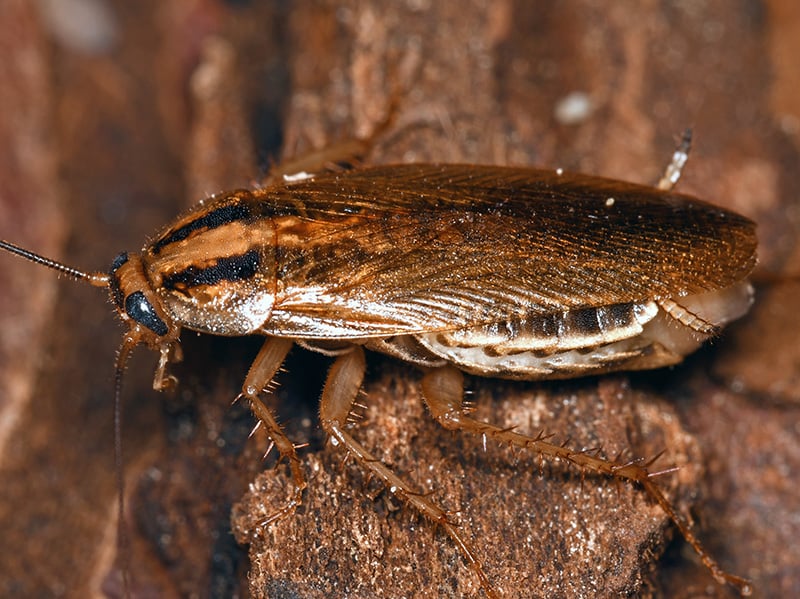
German cockroaches are small, light brown or tan insects with two dark stripes behind their heads that resemble an equal sign. Adults are typically ½ to ⅝ inch long and have wings, although they rarely fly. At the end of their abdomen, they have two tiny appendages called cerci, which help them detect movement.
Nymphs look different from adult German cockroaches. They start dark brown or nearly black with a pale tan spot. As they grow, the black color appears more along their sides, with tan running down the center. Once they develop wings, much of the dark coloration becomes hidden, except near the head.
German cockroaches also produce small, light brown egg cases called oothecae. They’re about ¼ inch long and have a narrow, capsule-like shape. Female German roaches often carry the ootheca until the eggs are close to hatching, which helps protect the developing nymphs. You may occasionally find discarded oothecae near warm, hidden areas, such as behind appliances or inside cabinets—another useful sign that you’re dealing with German roaches.
When Are German Cockroaches Most Active?
German cockroaches can remain active throughout the year because they live and reproduce primarily indoors. Heated homes, apartments, restaurants, and other buildings provide the warmth, moisture, and food they need to stay active in every season, regardless of outdoor weather.
Are German Cockroaches Nocturnal?
Yes. German cockroaches are primarily nighttime pests. They stay hidden during the day to avoid people and movement, then become active at night to find food and moisture.
But if you’re seeing them in daylight, that usually means the population is growing and competing for resources—one of the early warning signs of an infestation.
Are German Cockroaches Dangerous?
Unfortunately, yes. German cockroaches can spread bacteria and trigger health issues, particularly in homes with children or individuals who suffer from allergies or asthma. Because they’re attracted to food residue, moisture, and garbage, they can contaminate surfaces as they move.
Health concerns linked to German cockroaches include:
- Gastroenteritis
- Salmonellosis
- Asthma flare-ups
- Allergy symptoms
In Louisiana’s humid environments, infestations can grow rapidly, increasing the risk of exposure.
What Do German Cockroaches Eat?
Pretty much anything. These roaches are omnivores, meaning they eat whatever they can find, especially in kitchens and bathrooms. Their diet includes:
- Food crumbs
- Pet food
- Grease
- Glue
- Soap
- Cardboard and paper
- Dead skin
- Fecal matter
Because they can survive on materials we don’t consider food, they’re very hard to starve out.
How Long Can German Cockroaches Live Without Food or Water?
German cockroaches can survive up to a month without food, but only about a week without water. That’s why Louisiana homes with moisture issues, such as leaky pipes, dripping faucets, sweating refrigerator lines, or damp bathrooms, naturally attract them.
What Attracts German Cockroaches to Louisiana Homes?
Moisture is the biggest draw. These roaches actively seek out areas with water droplets or humidity, including:
- Bathroom sinks and tubs
- Kitchen sinks
- Behind refrigerators and dishwashers
- Laundry rooms
- Under leaky plumbing
- Damp cabinets
They also love warmth and tight hiding places, so you’ll often find them behind appliances, inside wall voids, and under kitchen or bathroom cabinets.
Signs You Have a German Cockroach Infestation
German roaches stay hidden, but they leave noticeable clues. Watch for:
- Small, pepper-like droppings in cabinets or drawers
- Smear marks around sinks or on baseboards
- Shed skins or egg casings
- A faint musty odor
- Live roaches when you turn on a light at night
Seeing even one often means more are hiding nearby.
How to Get Rid of German Cockroaches
German cockroaches reproduce quickly and hide deep inside cracks, wall voids, and appliance motors. DIY products may kill the ones you see, but they rarely eliminate the colony.
At Anti-Pest, we provide professional solutions specifically for Louisiana homes and businesses. Our Pest Plan covers 20+ common pests, including German roaches, and provides year-round pest protection to eliminate existing infestations and prevent them from returning.
We also provide commercial pest control for restaurants, hospitals, offices, and other businesses.
German Cockroach Prevention Tips
You can make your home less inviting by:
- Fixing leaks and reducing moisture around sinks and appliances
- Sealing cracks, gaps, and plumbing penetrations
- Keeping kitchens clean and free of crumbs
- Storing food (including pet food) in airtight containers
- Running exhaust fans in bathrooms and laundry rooms
- Reducing clutter, especially cardboard and paper storage
If you’re unsure where roaches may be hiding, we’re always here to help.
FAQ: Common Questions About German Cockroaches
Why am I seeing German roaches during the day?
This usually means the infestation is growing and roaches are running out of places to hide.
Can German cockroaches live in clean homes?
Yes. Cleanliness is helpful, but addressing moisture and hiding places is also crucial. Even spotless homes can attract them.
Do German cockroaches fly?
They have wings but rarely use them. They prefer running.
How fast do German roaches reproduce?
Very fast. A single female German cockroach can produce thousands of offspring in a year.

Testimonials


Our Services



News, Blogs, & Articles
Anti-Pest Blog